 English▼



- Отправить по электронной почте : David@tmaxcn.com
- Отправить по электронной почте : Davidtmaxcn@gmail.com
- : No. 39, Xinchang Road, Xinyang, Haicang Dist., Xiamen, Fujian, China (Mainland)
блог
Battery Pack Machine for Prismatic, Pouch & Cylindrical Cells
Scaling up module assembly often exposes severe bottlenecks in cell sorting, welding precision, and cycle testing. Production managers and procurement engineers regularly face unexpected yield losses caused by inconsistent internal resistance or misaligned weld spots on aluminum busbars. Evaluating the right equipment requires balancing automation speed against cell format flexibility. This review examines essential engineering parameters, semi-automated line architecture, and real factory integration standards to help technical teams source reliable machinery without costly line redesigns.
Engineering Architecture of Prismatic Pack Systems
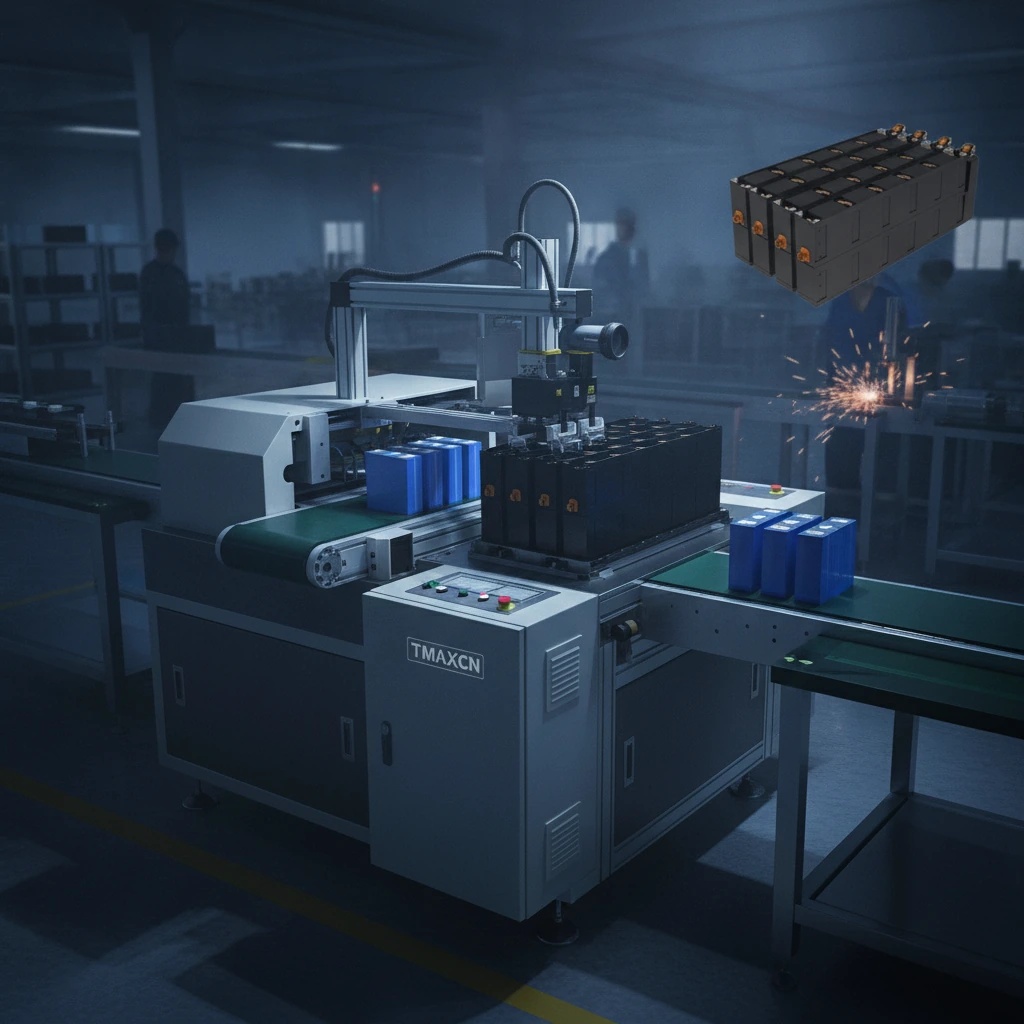
A standard semi-automatic production setup links discrete cell processing steps into a continuous flow. Prismatic cells first enter sorting stations to verify voltage consistency before mechanical assembly. Fixtures then clamp the cells into rigid blocks to manage structural swelling under continuous cycling.
Precision matters most during interconnect joining. Integrating a dedicated ensures repeatable contact resistance across aluminum and copper busbars. Modern setups combine pneumatic clamping with real-time displacement sensors. This combination prevents micro-cracks in fragile cell terminals.
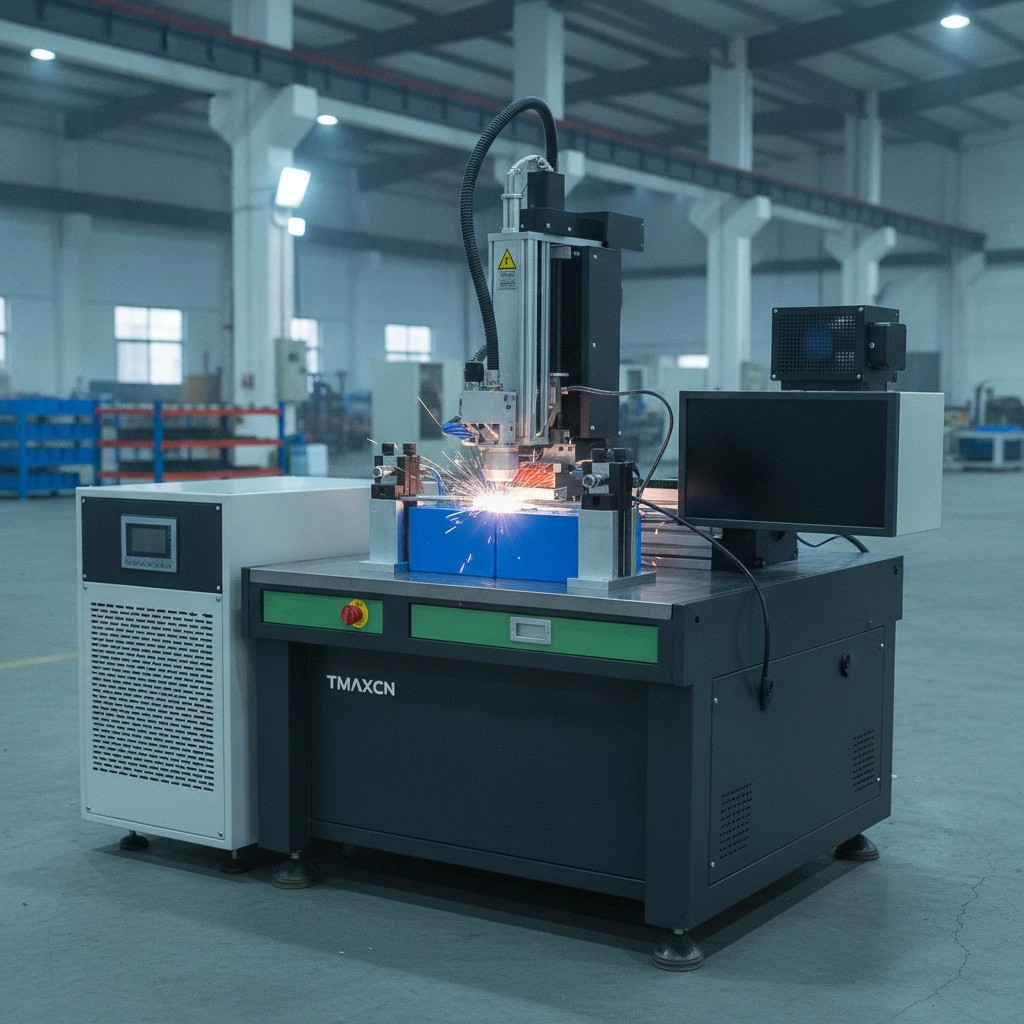
After physical framing, operators route the wiring harness and install the protection circuitry. The line finishes with insulation wrapping and protective casing assembly. Consistent mechanical tolerances keep rejection rates below industry benchmarks across multi-shift operations.
Key Station Criteria for Procurement Teams
Selecting production hardware requires evaluating station efficiency rather than standalone machine speed. Procurement teams should audit three critical operational zones to prevent assembly starvation.
Cell Grading and Compression
Grading stations must test open circuit voltage and internal resistance simultaneously. Raw sorting data should map directly into your execution system to track historical cell lots. Compression stations need calibrated pneumatic or servo drives, maintaining even pressure profiles across the entire cell surface.
Welding and Circuit Inspection
Welding stations demand adaptive energy monitoring to catch false joints immediately. Visual verification systems inspect weld pool geometry before parts proceed downstream. Incorporating reliable at this stage keeps electrical connectivity stable during transport and thermal stress.
End of Line Quality Validation
The completed module must clear rigorous electrical safety screens. Hi-pot testers verify isolation barriers, while communication testers poll the protection board for signal errors. Dedicated test rigs confirm thermal sensor placement and voltage balance before modules head to packing.
Turnkey Integration and Commissioning Timelines
Building a reliable manufacturing line involves tight coordination between hardware customization, tooling fabrication, and software calibration. Most manufacturing programs run across an eight to twelve week production window. Engineers configure machine frames, calibrate welding power units, and test automated indexing tables.
Station 1: Cell Sorting &
OCV/IR Check
│
▼
Station 2: Cell Stacking & Fixture Clamping
│
▼
Station 3: Laser / Spot Welding with CCD Check
│
▼
Station 4: BMS
Integration & Safety Testing
Hardware acceptance takes place at the manufacturing facility prior to dispatch. Sourcing an integrated simplifies interface matching across sorting, welding, and aging bays. All completed systems ship directly from Xiamen ports under full CE compliance documentation. Factory engineers oversee floor layout planning, sensor calibration, and technician handover to hit baseline capacity without lengthy delays.
FAQ
Can our battery pack machine adapt to multiple prismatic cell sizes?
Adjustable fixture tooling and programmable travel axes accommodate different cell heights and widths. Swapping modular fixtures takes less than thirty minutes during active line changeovers.
What lead time should we expect for a semi-automated battery pack assembly line?
Standard configurations typically complete production and factory acceptance testing within 8 to 12 weeks. Fully custom carrier fixtures or specialized welding optics may extend this timeline slightly.
Does the lithium battery pack equipment meet international export compliance?
Machinery manufactured for overseas delivery carries standard CE certification covering safety circuits, emergency stops, and structural guarding. Equipment crating follows export standards directly from our Xiamen facilities.
 +86 13174506016
 David@tmaxcn.com


